Boneyard Reviews Part 6
Updated: Aug 16
Timeline by Michael Crichton
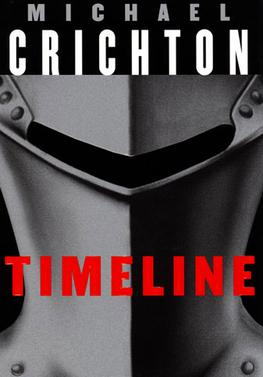
I have seen a few Blake Crouch fans reference Michael Crichton as their favorite author and Blake replacing Michael as their favorite author. So I had put this on my radar, although I still haven’t seen any of the Jurassic Park movies. I came across Michael’s book, Timeline, a 441-page book, at the Goodwill (it was $3.95) about time travel. I’m down with time travel, and I picked it up.
It starts out fine, and then came the multi-page passover of a helicopter of a site (I think they’re supposed to land?). It went on for pages, so I got a little antsy—I’m sure there’s a good reason for the lingering.
Now, a couple of strange things happened all at once. First, this is a hardback book, so it's large, and I was taking a train ride toting it around. This got me thinking about an eReader I had purchased years ago. Upon returning home, I dusted off the eReader to see if I could get it working.
During the writing of my book Sanctary, a beta reader had suggested The Last Act by Brad Parks, noting we had a similar humor. I do remember starting to read it, liking it, but something happened, and I was unable to finish it, which was very common for me back then.
When I got the eReader working, I realized I could interface with my library and borrow ebooks. I didn’t know how I felt about using an eReader; up to now it was physical books. In the recesses of my mind, I was thinking that maybe that was the problem in the past—eBooks. Ebooks do have one huge advantage—the dictionary is one press of the finger away, and they are light and compact, and they are backlit so you can read without a book light. Okay, so there are plenty of good reasons to use an eReader.

Getting the device working, I was assaulted with the ghost of the past—all the books I started and didn’t finish. The Last Act was there and wasn’t available, but Closer Than You Know (another Brad Parks book) was available. Besides, I’m only testing the device.
I paused on the Timeline book (I didn’t throw it to the boneyard—I’m pausing) and read a few pages of Closer Than You Know. A funny thing happened on the way to the state fair, or is it the forum, or whatever that saying is. I started reading a story—this book is not one I would have necessarily picked up off the shelf. It’s about a woman losing her baby (the baby is taken by CPS), and she’s fighting to stay out of jail. I noticed all the things missing. Where was all the worldbuilding? The attempts to drown the reader in words? Where is the hammer of one or more thoughts over and over and over again? I was dumbfounded. A story? Really?
I found this book so compelling—I hated to put it down. Now, I’m not a fast reader, so it took me a week to get through the book, but I was behaving strangely. My earmarked time for reading in the morning was 8-10; I found myself picking up the book when I had any spare time—very odd. I could wait to get back to it.
He wove a beautiful story of a couple who was adopting a baby, a serial rapist who was being hunted, the personalities of a district attorney's office, and this mother caught between these worlds. I thought it was all going to come crashing down at the end, but he held it together.
At the end I was floored—a story—huh. I know numerous people love the worldbuilding and all the word salad they can get immersed in, and as I have stated before, I’m interested in finding a good story. This is one. Highly recommended.
Now, I’ll see if I can find my way back to Timeline.
Boneyard 10, No Recommendation 6, Recommend 5, Highly Recommend 4
The Space Between Worlds by Micaiah Johnson. 407pg

Working with my new e-reader and the Libby app (access to library books), I have always given reading priority to library books due to the fact they have a return date. Working my Gemini list and what is available through Libby (most books you have to request a hold.) This one was available (I’ve been hunting for it for a while). You can read a sample from the book, and she quotes Brian Greene, one of my favorite physicists. If you have seen What the Bleep??, a good deal of his work was used in that movie, which is how I got to know about him. So, Brian Greene quote, we’re off to a smashing start. This is about parallel worlds and how the characters in the book interact with and travel to and from them—a subject I love.
A was confused at first, as it seemed to be about caste systems and how the upper-class abuses and uses the lower class—it seemed whiny. Worse, it seemed like an agenda book (a book about a subject you're very passionate about, and you cloak it as a story). There was also, in my mind, confusion as to why these people were visiting these worlds. They could see the activity, like they knew if the parallel person was alive or dead in that world. A person traveling between these would get bodily injuries. So they used trash people for this task (that’s my word, but as she describes them, that's what they were.) Very bleak, and I will “tell” you about it for the first half. Bleak, dark, and depressing is how the mood has been up to now.
The second part shifts into show-versus-tell mode. Even though the style changed, the tone didn’t; in fact, it seemed to get more depressing. It felt like work reading it; I mean, you want to give the author a runway creating their vision. But I kept thinking, why am I reading this? I’m not enjoying it, and it was putting me in a bad mood. It felt, not like torture, but it certainly felt like work. I’m sure it was going somewhere glorious, but I didn’t care. So on page 102, to the boneyard.
Now maybe I can get back to Michael Crichton’s Timeline. On my enthusiasm meter, it’s running about a 2 out of 10.
Boneyard 11, No Recommendation 6, Recommend 5, Highly Recommend 4
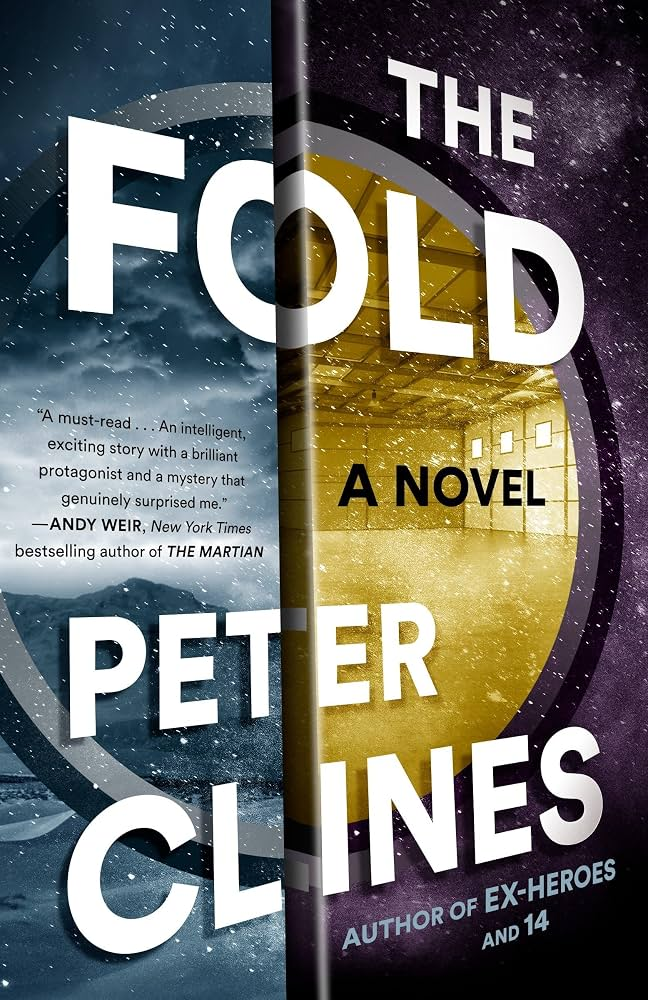
The Fold by Peter Clines
This is one of the funnest books I’ve read. Peter is a master at banter and humorous dialogue. The Fold is about parallel worlds interfacing through a machine. Lots of secrecy surrounds this device and the project. Things ramp well in the storyline; he stays focused and on task with the story. At this point, I love this book, and then the action starts—a fight between the current reality and the one that breaches through the device, coming from another world; it might even be the future. There's lots of speculation about this. As good as the first 2/3s of the story were, that's how bad the last five chapters are. I found myself skipping as the writing was chaotic, and most of the time I could make sense of what was going on. To compound things, Peter uses certain words over and over to describe things, like the word ‘wet.’ Blood oozing was ‘wet.’ Wet is not an inaccurate word to describe how it feels on the skin, but he used it over and over. Also stitches ripping—it was a lot of stitches that ripped. I got to the end and sat for a day or so, thinking maybe I was too harsh, so I reread the last five chapters—no, I was right on about my assessment. I was at a loss about how well written the book started and how bad the action scenes were—was this written by two different people? Likewise, I criticized the strengths and weaknesses in the author's writing before, and the contrast in this book left me scratching my head. Anyway, I finished the book (twice), so it doesn’t go to the boneyard; I just can’t recommend it, which is sad due to the strong first 2/3s.
Boneyard 11, No Recommendation 7, Recommend 5, Highly Recommend 4

Oona Out of Order by Margarita Montimore
There’s a saying in cinema, the movies: that you get one big lie. The audience will forgive one thing that doesn’t make sense. Oona goes through this process on her 18th birthday (which happens to be on New Year's) and every birthday after that, where she skips to a different year of her life; it’s just not in sequence. Like the first jump, as she calls it, she goes from 18 to 51 and everything that goes along with it; she really focused on looks in this book, so at 51 she’s gained more weight and has wrinkles around the eyes, doesn’t move as well as she did when she was 18, etc. There’s also a lot of focus on her partners during these different slices of life and how attractive they are. Even with that, at least for me, I’m hanging in there for a unique spin on a time travel story.
When she awakens in this new time frame, there’s always a letter from herself from the year before, explaining certain aspects of the odd things she will be going through as a result of jumping from one year to another. I thought this was an odd technique that Margarita didn’t fully work through. The letter from herself in the previous year would suggest she has done this more than once, or how would she know what her first jump was going to be like? I kept reading, thinking maybe she was going to be reliving years over and over. To be all-knowing and writing to yourself to look out for this: Don't have sex with that guy; that guy, your boyfriend, is tough to reconcile. As we go through the story, these are year one-offs, never repeated, which means her previous year wouldn’t know anything about the upcoming year.
The letters were all from the previous year. It wasn’t like the movie Memento, where the character has short-term memory loss, so he wrote 3x5 index cards and on his skin about things to do or watch out for. That character has previous knowledge, so it worked. In this story, the character can’t provide insight unless she has lived it once before, which she didn’t, thus the lie. If this letter was left out, I think it would have elevated the story, as the character would have had to navigate the year blind. For me, a story has to make sense, even in fiction. Get rid of the letter; I think there's something worth the read. Anyway, I entertained this book for about 15 chapters before throwing it to the boneyard.
Boneyard 12, No Recommendation 7, Recommend 5, Highly Recommend 4


Comments